
Google Ads Management
What to check in Google Ads before increasing budget
Before scaling spend, review campaign structure, search terms, negatives, landing pages, conversion actions, and lead quality.
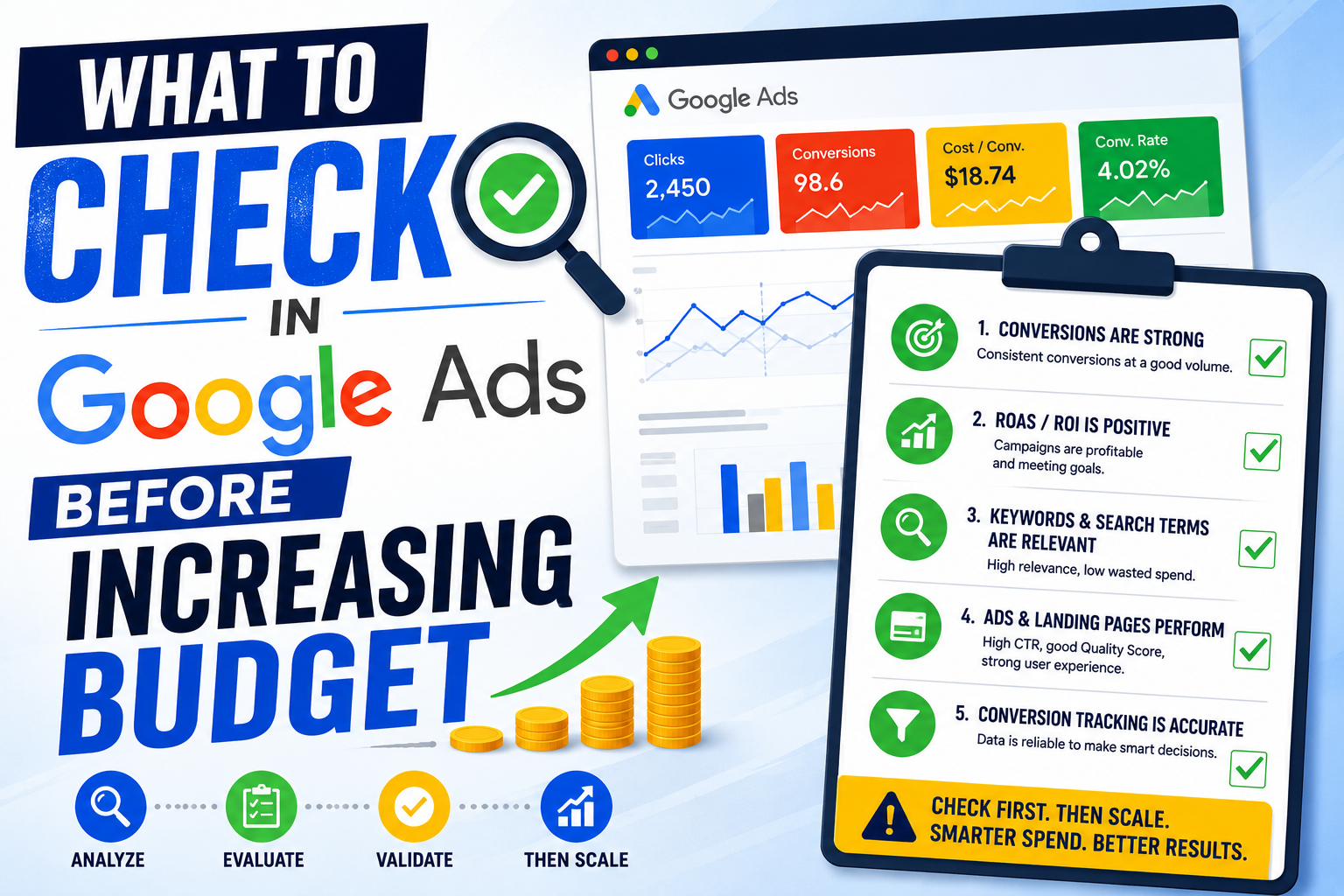
Campaign structure comes first
Budget should not scale until the account structure is clean enough to learn from. Campaigns and ad groups should be organized around meaningful intent, not convenience. A service business needs to know which services are worth buying traffic for, which searches indicate a serious buyer, and which campaigns are only generating noise. If brand terms, competitor terms, broad research queries, and high-intent service searches are mixed together, performance data becomes hard to trust. Scaling that structure usually increases spend before it increases clarity. Clean structure lets the business see which service lines deserve more budget and which ones need page, offer, or tracking work first.
Search terms reveal quality
Search terms show what the account is actually buying. This is one of the most important checks before raising budget. Keywords may look clean in the campaign setup, but search terms reveal whether the account is matching to weak-fit research, unrelated services, job seekers, DIY searches, competitor confusion, or locations the business does not serve. The goal is not to remove every imperfect query. The goal is to understand whether spend is moving toward qualified demand. If search terms are drifting, increasing budget usually amplifies the waste. This review should happen before the account gets rewarded with more money.
- Irrelevant services
- DIY or research intent
- Wrong geography
- Job or training searches
- Competitor confusion
Negatives protect the budget
Negative keywords are not just cleanup after a bad month. They are budget protection. Before scaling, the account should have clear negative logic at the campaign and ad group level. Shared negatives can block obvious waste across the account, while ad-group negatives can control overlap between similar services. This matters when multiple campaigns target related terms. Without negative structure, the wrong ad group may enter the auction, the wrong landing page may receive the click, and reporting may make the wrong campaign look responsible for the lead. Negatives should support intent separation, not just remove obviously bad queries.
Conversions need a role
Every conversion action should have a role. Some actions should guide optimization because they represent meaningful leads. Others are useful for diagnosis but should not drive bidding decisions. Form submissions, phone calls, booking requests, and qualified lead events may deserve different treatment from button clicks, page views, or light engagement. Before increasing budget, review primary versus secondary conversions, duplicate counting, event firing, and whether the account is optimizing toward actions the business actually values. This prevents the account from treating weak engagement as if it were revenue opportunity.
Lead quality decides whether scaling is real
More conversions are not always better. A campaign can generate more forms while producing weaker opportunities. Before scaling, the business should review lead quality by service, source, search theme, landing page, and follow-up outcome. Even a simple monthly review can expose whether leads are relevant, reachable, in the right market, and worth pursuing. This is where Google Ads connects to CRM routing, intake forms, and reporting. Scaling should happen after the account can show which traffic creates real opportunities. Otherwise, the business may celebrate lower cost per lead while sales deals with lower-fit inquiries.
Scale after the system is stable
The safest time to raise budget is when structure, search terms, negatives, landing pages, conversion tracking, and lead feedback all point in the same direction. That does not mean the account must be perfect. It means the next dollar has a reasonable chance of buying more of the right traffic instead of more confusion. If the audit shows weak tracking or poor lead quality, the better move is to fix the system before adding spend. Budget increases should be treated as a scaling decision, not a substitute for strategy. The audit should leave the business with one of three clear answers: scale carefully, fix first, or pause weak areas until the economics make sense. This keeps the account tied to business outcomes instead of spending momentum.
Related Service