
Nationwide Google Ads management
Nationwide Google Ads management for small and service businesses focused on qualified leads.
Vizion Space cleans up Google Ads structure, aligns search intent with landing pages, and makes conversion tracking useful enough to guide spend decisions.
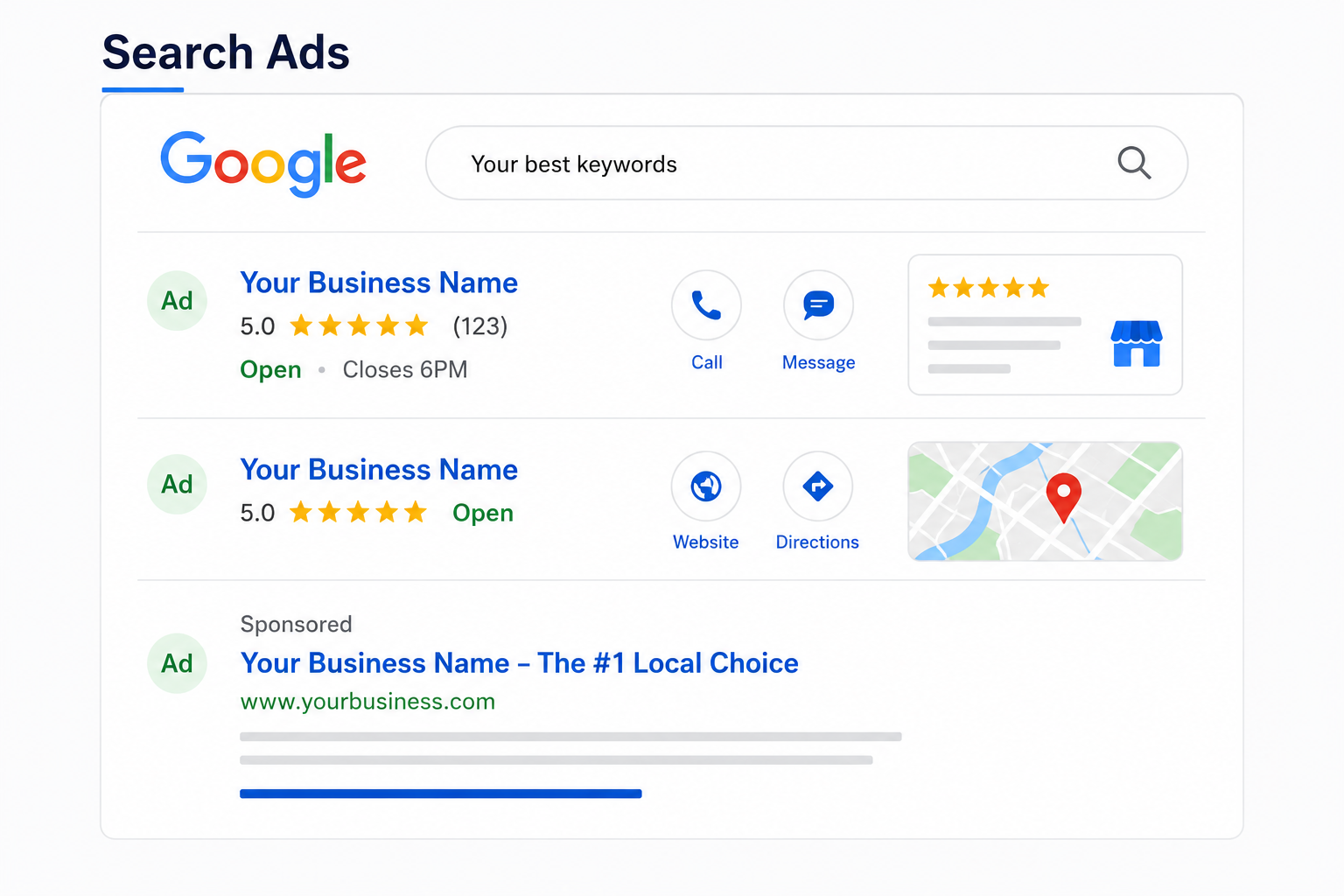
Problems We Solve
The work starts where growth is leaking.
Paired solution
Review campaign structure, keywords, negatives, assets, landing pages, and conversion actions. For Google Ads Management, this supports the page promise directly: Vizion Space cleans up Google Ads structure, aligns search intent with landing pages, and makes conversion tracking useful enough to guide spend decisions. It addresses message mismatch with Campaign audit, Ad group structure, and Keyword and negative map: Campaigns send traffic to pages that do not match search intent. The fix starts by deciding which page owns the topic, which supporting pages should exist, and which proof or internal links need to reinforce the path.
Paired solution
Account cleanup
Review campaign structure, keywords, negatives, assets, landing pages, and conversion actions. For Google Ads Management, this supports the page promise directly: Vizion Space cleans up Google Ads structure, aligns search intent with landing pages, and makes conversion tracking useful enough to guide spend decisions. It addresses message mismatch with Campaign audit, Ad group structure, and Keyword and negative map: Campaigns send traffic to pages that do not match search intent. The fix starts by deciding which page owns the topic, which supporting pages should exist, and which proof or internal links need to reinforce the path.
Deliverables
Clear outputs your team can use after launch.
Every Google Ads Management engagement leaves behind practical assets tied to implementation, ownership, and review. The goal is a cleaner operating path, not a static recommendation deck.
Audit the current path
Review the site, offer, lead flow, tracking, and operating constraints before recommending changes.
Build the first useful layer
Ship the pages, systems, tracking, or workflows that remove the clearest growth bottleneck.
Measure and improve
Use reporting, client feedback, and qualified lead quality to decide what gets scaled next.
Campaign audit
Keeps paid-search structure tied to buyer intent, page fit, budget control, and lead-quality feedback.
Ad group structure
Defines the asset, owner, review point, and next action needed to make the work useful after delivery.
Keyword and negative map
Defines which searches, questions, and intent clusters belong to each page so Google Ads Management can grow without topic overlap.
Landing page recommendations
Turns the service offer into buyer-ready page structure, proof, objections, FAQs, and calls to action.
Conversion tracking review
Clarifies which actions should count, which signals are diagnostic, and how conversion data should guide optimization.
Monthly optimization notes
Creates a review rhythm for pages, sources, actions, and lead quality so reporting turns into decisions.
Service Depth
Subservices under Google Ads Management
Google Ads audit
Google Ads Audit
Review campaigns, keywords, search terms, conversion actions, landing pages, and budget logic before changing spend.
Explore pageLead generation ads
Google Ads Lead Generation
Build paid search campaigns that connect keyword intent, landing page message, conversion tracking, and sales follow-up.
Explore pageConversion tracking
Conversion Tracking
Clarify form submissions, calls, booking actions, and reporting events so SEO and ads decisions are based on useful conversion signals.
Explore pageDelivery Process
Simple enough to start. Structured enough to scale.
Google Ads Management work moves through a tight operating rhythm: diagnose the real constraint, ship the highest-leverage layer, then use real signals to decide what deserves expansion.
Phase 1
Audit the current path
Review the site, offer, lead flow, tracking, and operating constraints before recommending changes.
Phase 2
Build the first useful layer
Ship the pages, systems, tracking, or workflows that remove the clearest growth bottleneck.
Phase 3
Measure and improve
Use reporting, client feedback, and qualified lead quality to decide what gets scaled next.
Filtered Case Studies
Relevant case study proof for this service.

PPC campaign structure and budget control
Google Ads waste-control structure
Google Ads strategy playbook
A Google Ads setup framework for service businesses that need buyer-intent campaigns without broad-match waste, weak conversion signals, or irrelevant clicks.
Branded PPC budget control
Branded search budget control
Google Ads strategy playbook
A branded search framework for deciding when company-name keywords deserve paid coverage, how to keep brand campaigns from overwhelming spend, and how to protect organic search from unnecessary cannibalization.
Related Blog
Articles connected to this service.
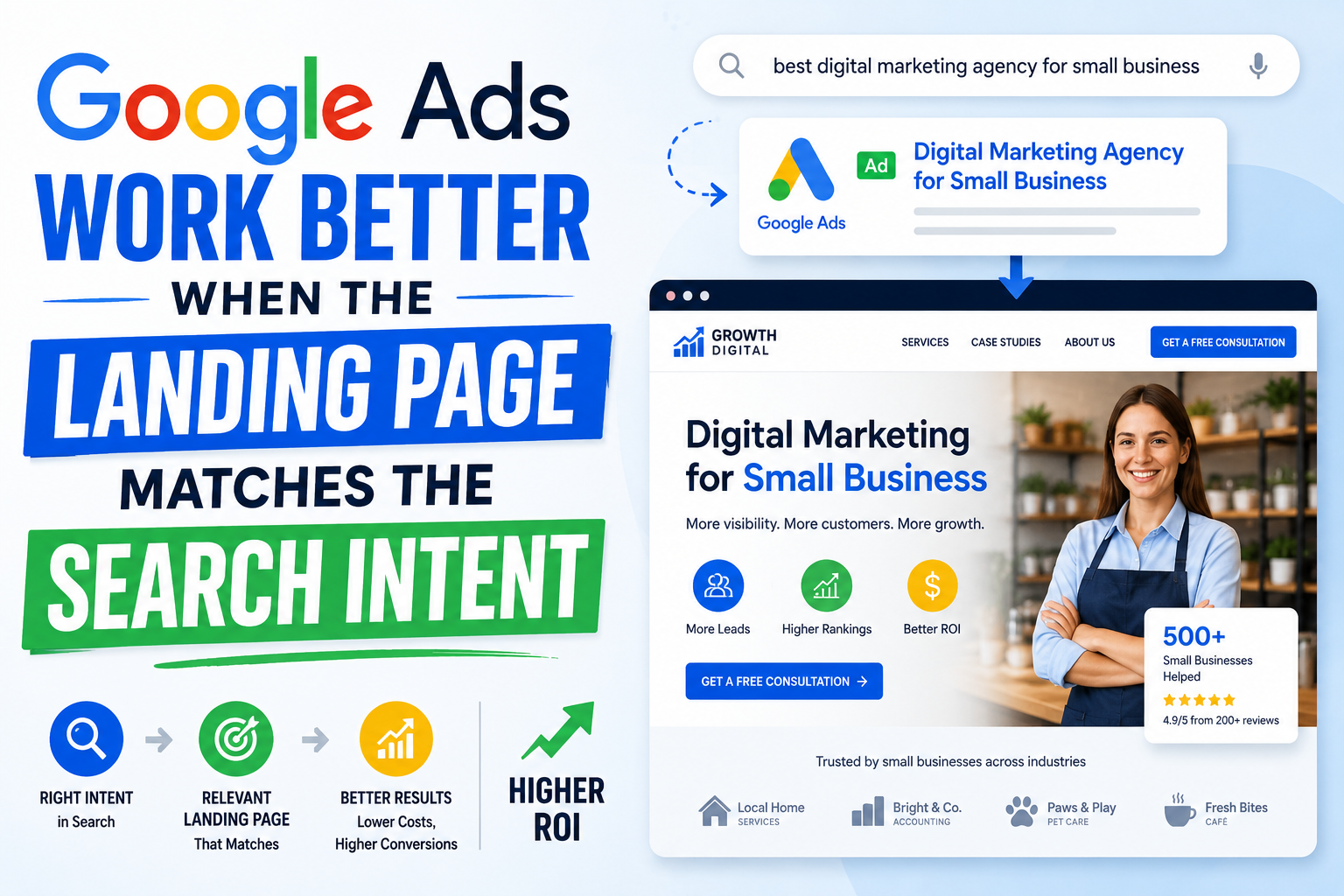
Google Ads Management
Google Ads work better when the landing page matches the search intent
Campaign structure, ad copy, landing page message, form fields, and conversion tracking should be planned as one system.
5 min read
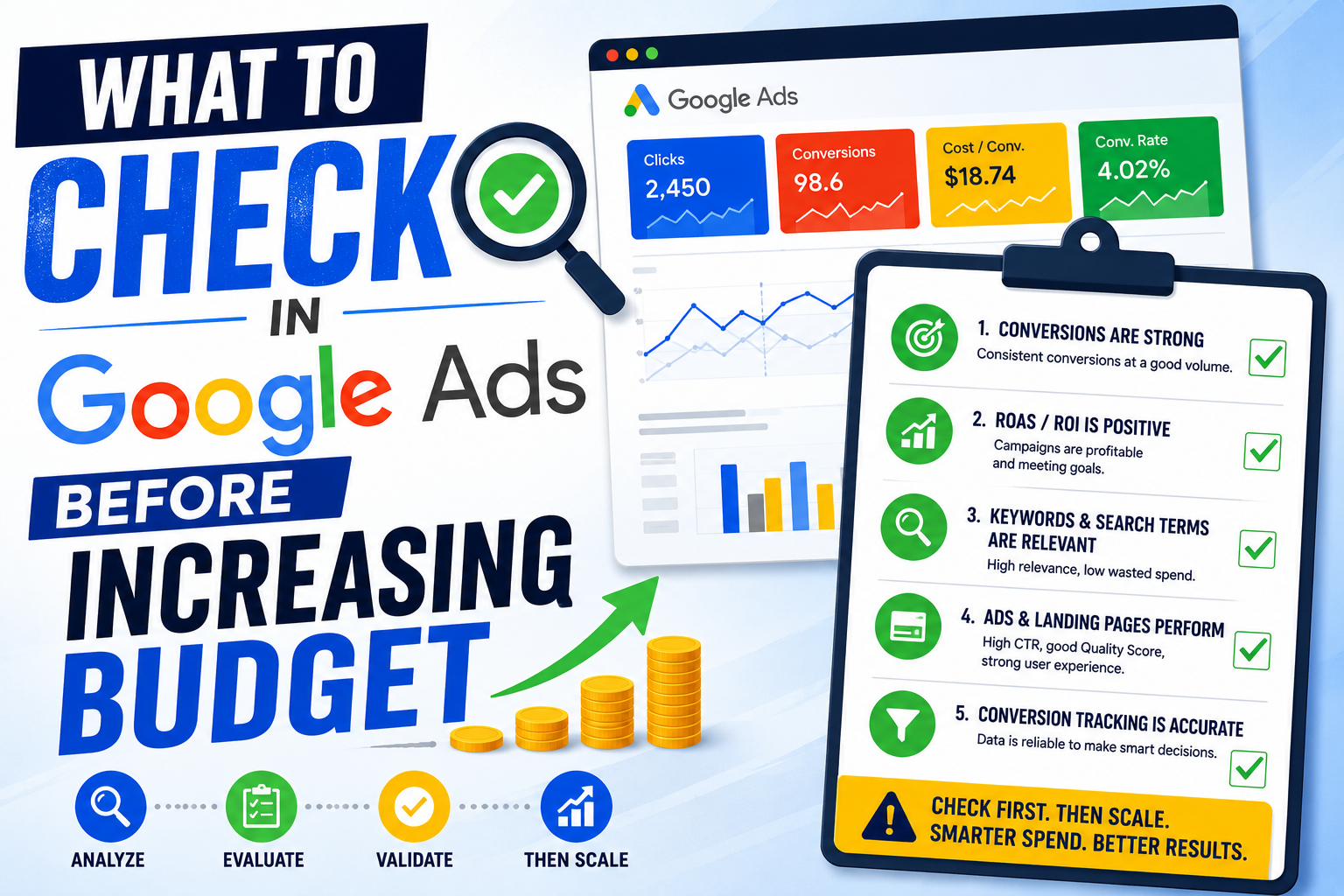
Google Ads Management
What to check in Google Ads before increasing budget
Before scaling spend, review campaign structure, search terms, negatives, landing pages, conversion actions, and lead quality.
4 min read
FAQ
Management can include account and campaign structure, keyword and negative-keyword planning, responsive search ads and assets, location and schedule settings, landing-page alignment, conversion-action review, search-term analysis, budget pacing, and reporting. The exact scope depends on the account, offer, sales area, tracking quality, and business goal.
Yes. Nationwide campaigns are structured around the services, markets, budgets, and search intent the business can actually support. Local campaigns use tighter geographic settings and location-specific page relevance where justified. The account should not mix different markets or economics merely to chase more traffic.
Management cost depends on account complexity, the number of campaigns and markets, landing-page needs, measurement quality, and the review cadence. Media spend is separate from management. VizionSpace defines the management scope and budget responsibilities before work begins instead of quoting a one-size-fits-all price.
Campaigns can begin generating search activity after launch, but reliable decisions take longer. Timing depends on demand, competition, budget, approval speed, conversion volume, and tracking quality. Early work focuses on query relevance, measurement, and lead feedback; VizionSpace does not guarantee a date, cost per lead, or lead volume.
Sometimes. A current page can remain when it matches search intent, explains the offer, builds trust, and supports a clear conversion action. When it does not, campaign changes alone cannot solve the mismatch. The first audit identifies whether the page, measurement, offer, or account structure is the priority.
Qualified leads matter more than form volume. Search terms, landing pages, conversion actions, and sales feedback should be reviewed together so the account can distinguish useful inquiries from weak-fit activity. Optimization is limited when the business cannot return lead-quality feedback.
Look for a provider that asks about qualified outcomes, margins or lead value, service area, landing pages, conversion tracking, and sales feedback before recommending bidding or budget changes. They should explain account ownership, reporting, and what is included. Avoid guaranteed lead counts, unexplained automation, and decisions based only on clicks or ad strength.
Next Step