
Google Ads Management
Google Ads work better when the landing page matches the search intent
Campaign structure, ad copy, landing page message, form fields, and conversion tracking should be planned as one system.
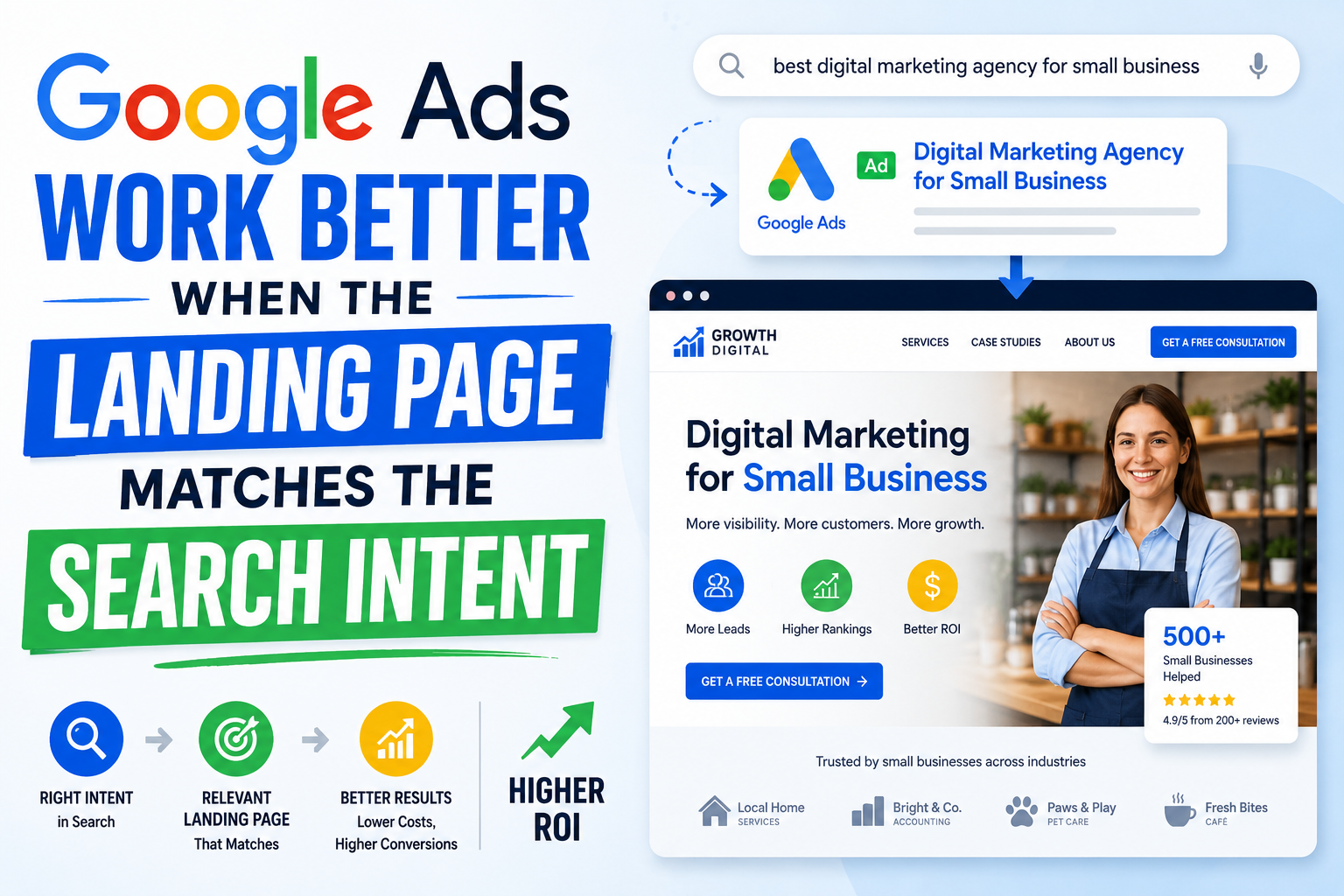
Search intent should shape the page
A visitor who clicks a Google Ads result is usually moving with a specific intent. They may want a quote, an audit, a comparison, a local provider, or a direct solution to a problem. The landing page should reflect that intent immediately. If the ad promises a Google Ads audit, the page should not open with a broad agency overview. If the search is for lead generation, the page should explain how the campaign, landing page, form, and follow-up path will produce qualified opportunities. Message match reduces confusion and gives the visitor a clearer reason to continue. It also makes the campaign easier to evaluate because the page is built around the same promise that earned the click.
Campaign structure and page structure should agree
Campaigns and landing pages should be planned together. The ad group, keywords, ad copy, headline, proof, CTA, and form should all point toward the same offer. When campaign structure is broad but the page is specific, visitors may feel misled. When the campaign is specific but the page is broad, conversion rates and lead quality usually suffer. A strong setup connects the search term to the page promise and then connects the page promise to a clear next step. This makes performance easier to diagnose because weak results can be traced to campaign intent, page message, form friction, or tracking quality. Without that alignment, optimization turns into guessing.
The form is part of the campaign
The form is not just a contact box. It is part of the paid search system. It should collect enough context to qualify the lead without creating unnecessary friction. For a service business, useful fields might include service need, timeline, location or service area, budget range, website URL, current tools, or the problem they want solved. The right fields depend on the offer. A simple quote request should be lighter. A growth audit can ask more because the visitor expects a more strategic review. The form should also preserve source and campaign context so the team can compare lead quality across ad groups and landing pages.
- Service need
- Timeline
- Location or market
- Website or account context
- Best contact method
Tracking decides what gets optimized
Google Ads performance depends on what the account is told to value. If weak actions are treated as primary conversions, the campaign can optimize toward the wrong behavior. If duplicate form events, button clicks, or page views are counted as leads, the data can look better than the business reality. Landing pages should be built with conversion tracking in mind from the start. The business needs to know which actions are lead indicators, which are diagnostic, and which should actually guide bidding and budget decisions. Clean tracking keeps the account from learning from noise and gives budget decisions a stronger basis.
Follow-up affects paid search performance
A landing page does not finish the job when the form submits. The follow-up path determines whether paid traffic becomes revenue. Fast response, clear routing, useful lead context, and source data all matter. If a lead comes from a specific campaign, the team should know what the visitor requested and what page they came from. That context helps sales respond better and helps marketing understand which searches are producing real opportunities instead of only form fills. Paid search performance should be reviewed with sales feedback because the best landing page is the one that starts a useful conversation.
Improve one system, not one page
Landing page alignment is not a cosmetic exercise. It is a system decision. The campaign buys the traffic, the page explains the offer, the form qualifies the inquiry, tracking measures the action, and follow-up turns the lead into an opportunity. When those pieces are planned together, Google Ads becomes easier to manage and easier to scale. When they are disconnected, the account may spend more without learning what actually works. This is why landing page work, conversion tracking, and campaign cleanup should be treated as one growth system instead of separate projects. The payoff is not just a better page; it is cleaner learning across the whole paid search path.
Related Service