
SEO Services
How to use local SEO without building thin city pages
Local trust can support a broader digital solutions site through GBP, reviews, citations, proof, and visible business facts.
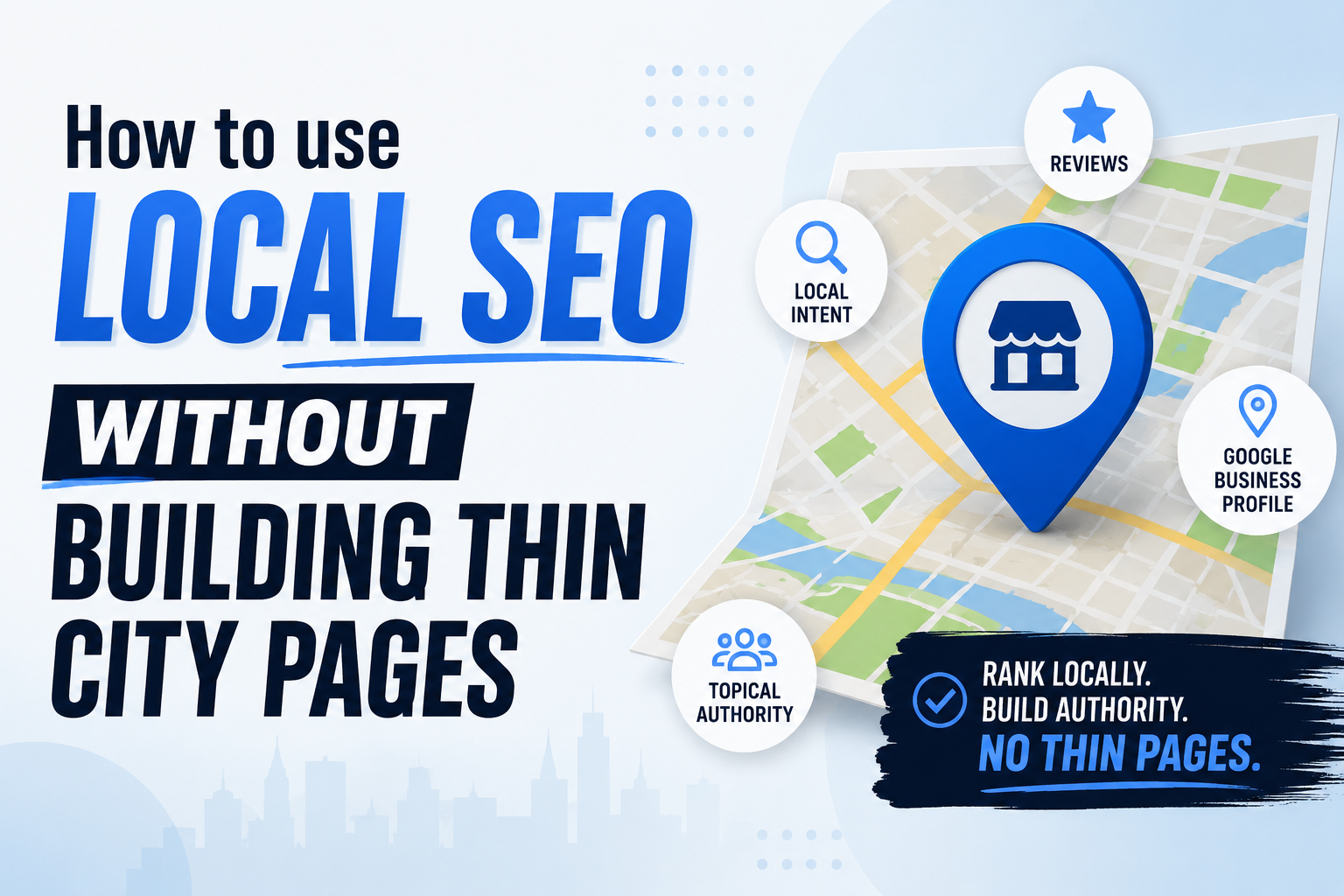
Local proof is different from location spam
Local SEO can support trust without turning the website into a pile of duplicate city pages. A real business address, Google Business Profile, reviews, local citations, client footprint, local examples, and visible contact information all help users understand that the business is legitimate. That is different from creating dozens of nearly identical pages that swap one city name for another. Thin city pages may look like an easy SEO shortcut, but they usually do not help the visitor. Local proof should make the business feel more credible, not make the site harder to use. The best local signals are useful even if search engines did not exist because they help real buyers trust the company.
Make the main service pages stronger first
Before building location pages, the core service pages should be clear, useful, and commercially focused. A business that offers SEO, Google Ads, web design, automation, or reporting needs pages that explain those services well first. If the main service page is thin, creating city variations will not fix the problem. Strong service pages can support broad search intent, paid traffic, internal links, and sales conversations. Local signals can then add trust around the business rather than carrying the whole SEO strategy. This keeps the site architecture cleaner and reduces the risk of publishing pages that compete with each other for the same intent.
Use location pages only when they add value
A location page should exist only when it can say something useful and specific. That might include local service constraints, relevant projects, local proof, area-specific FAQs, team coverage, photos, reviews, or examples that matter to that audience. If the only difference is the city name, the page is not ready. This matters for service businesses because the goal is not just more indexed URLs. The goal is qualified traffic that understands the offer and has a reason to trust the company. A selective location-page strategy also makes future maintenance easier because each page has a clear purpose.
- Local proof
- Area-specific context
- Relevant services
- Useful FAQs
- Clear next step
Build trust signals around the business
Local SEO is stronger when trust signals are consistent. The business name, address, phone number, service area, hours, reviews, and external profiles should align. The site should make it easy for a visitor to see who the company serves and how to contact it. For a digital services firm, local proof can support credibility even when the work is not limited to one city. The page architecture should avoid pretending every service is local-only when the offer can serve broader markets. Consistency also helps the business look more established across the site, Google Business Profile, citations, social profiles, and client-facing materials.
Keep national service pages broad
For remote or hybrid digital solutions, broad service pages can target national or category-level intent while local signals support credibility. This is a better fit than forcing every service into a city-page structure. A company can still show its Tampa presence, client footprint, Google Business Profile, reviews, and local examples, but the main service pages should stay focused on the buyer problem and service intent. That creates a cleaner site for users and a more sustainable SEO structure. It also leaves room for truly useful local pages later if search data or business strategy proves they are needed.
Use internal links to connect proof and services
Local proof should not sit isolated. Case studies, service pages, blog posts, and contact pages should connect naturally. A local SEO article can point readers toward technical SEO, service-page design, or client footprint pages when those are the next useful step. Internal links help users continue learning and help search engines understand the relationship between services, proof, and supporting content. The anchor text should be natural and helpful, not forced. The practical rule is simple: if the link helps the visitor understand the business or take the next step, it probably belongs. This approach builds a site that feels connected instead of a collection of disconnected SEO pages. It also helps each piece of local proof support the larger service architecture.
Related Service