
Operations automation
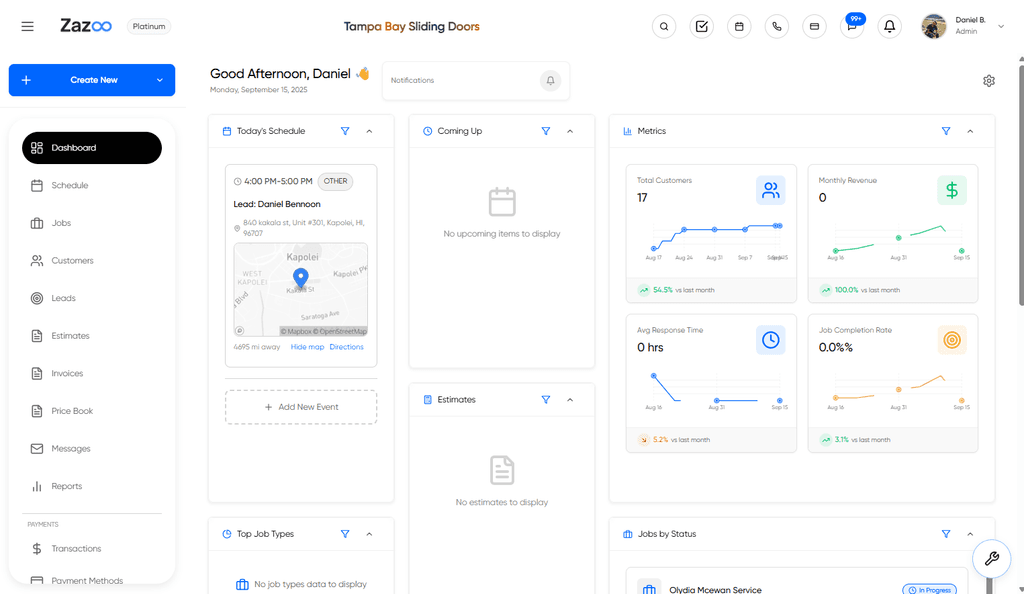
AI, CRM, and IVR lead automation case study
An operations blueprint for connecting Twilio, Zazoo, smart IVR, lead intake, scheduling, and CRM routing so service businesses capture and act on leads faster.
Main Result
Faster handoff
from call or form to scheduled CRM lead
Client
Service business automation system
AI automation, CRM routing, and smart IVR
Lead capture
Cleaner
Calls and forms route into CRM records
Scheduling
Faster
Booked opportunities move into the operating system
Follow-up
Consistent
Tasks and context reduce missed opportunities
Automation
Practical
AI supports repeated work instead of adding tool noise
Challenge
What had to change
Service businesses lose revenue when calls, forms, and follow-up tasks sit in disconnected tools. The fix is not more software; it is a clearer lead path from intake to scheduled opportunity.
Approach
The operating moves behind the result
Route calls through smart IVR
Twilio-powered call flows can qualify intent, reduce missed handoffs, and route urgent service calls to the right next step.
Push lead context into Zazoo
Lead source, requested service, customer details, appointment context, and follow-up tasks should enter the CRM without manual retyping.
Use AI where repetition appears
AI can support call summaries, lead notes, intake classification, follow-up drafts, and reporting without replacing human review.
Correct Approach
Practical rules from the case study
- Map the lead path before choosing automations.
- Capture source, service, urgency, and owner on every lead.
- Use Twilio for call routing when phone leads matter.
- Use Zazoo as the operating layer for scheduling, follow-up, invoices, and reporting.
- Keep AI in reviewable workflows until quality is proven.
Next Step
Start by mapping the current intake path, then automate the highest-leak handoff first.
Related Services