
Analytics & Reporting
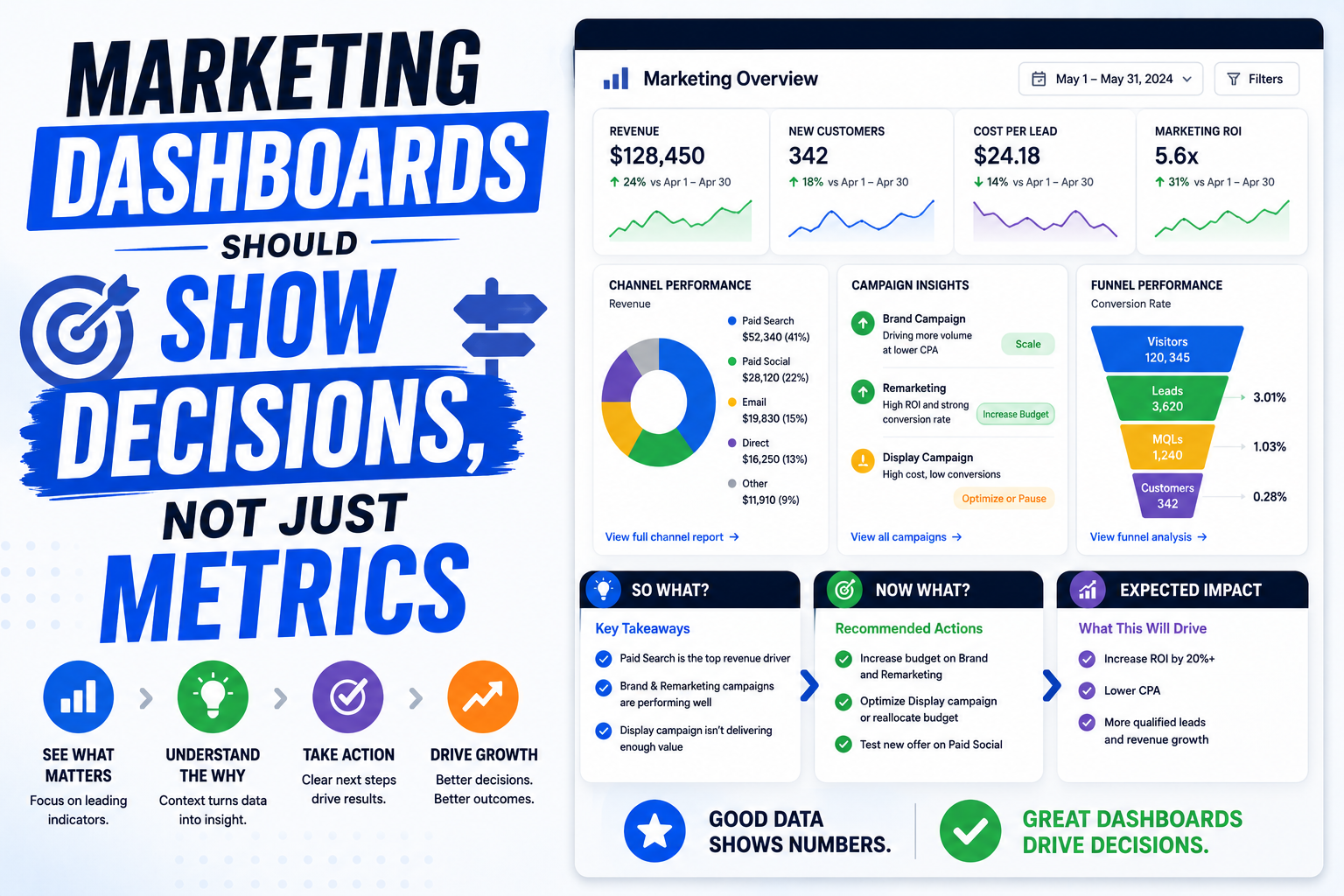
Marketing dashboards should show decisions, not just metrics
The best dashboard connects pages, sources, campaigns, conversions, and lead quality to a monthly action list.
Start with the decision
A marketing dashboard should start with the decisions the business needs to make. What should be improved, paused, scaled, fixed, or investigated next? If the dashboard cannot answer that, it is probably decoration. Service businesses do not need more charts for their own sake. They need to know which pages attract qualified visitors, which campaigns create real opportunities, which forms convert, which sources produce weak leads, and what the next action should be. The dashboard should support a monthly operating rhythm, not just a reporting habit. The point is to make the next decision easier, faster, and more defensible.
Connect channels to pages
SEO, Google Ads, referral traffic, and direct visits should not be reviewed only as channel totals. The useful view connects channels to landing pages and conversion actions. A page may look successful because it gets traffic, but it may not generate qualified inquiries. A campaign may look expensive until lead quality is reviewed. A blog post may not convert directly, but it may support a service page through internal links and topical relevance. Connecting channels to pages helps the business see where content, ads, forms, and follow-up need work. This view is especially useful for service businesses because every page should have a role in the path toward qualified demand.
Separate signal from noise
Dashboards often become cluttered because every available metric gets added. That makes the report harder to use. The better approach is to separate operational signals from background data. Sessions, impressions, clicks, CTR, conversions, cost, and engagement can all matter, but they should be organized around decisions. A dashboard for SEO should highlight query and page opportunities. A dashboard for Google Ads should show spend, conversion quality, and search intent. A dashboard for forms should show source, service, and follow-up context. The dashboard should make patterns easier to see, not require another analyst to explain every month.
- Traffic source
- Landing page
- Conversion action
- Lead quality
- Next action
Add lead quality feedback
Lead quantity is not enough. Reporting should include whether inquiries were relevant, reachable, in the right market, and worth pursuing. This feedback does not need to be complicated at first. Even a simple lead-quality field in a CRM or monthly notes document can improve decisions. Without lead quality, marketing may scale the campaigns or pages that generate the most forms instead of the ones that create the best opportunities. This is where analytics, intake forms, CRM routing, and sales feedback need to connect. The best dashboard gives marketing and sales a shared view of what is actually valuable.
Turn reporting into an action backlog
The dashboard should produce an action backlog. If organic impressions are rising but clicks are weak, the next action may be title and meta improvement. If paid search spend is high but leads are weak, the next action may be search-term cleanup or landing page alignment. If a form converts but follow-up is slow, the next action may be routing or automation. Reporting becomes valuable when it turns into a prioritized list of fixes, tests, and content improvements. This is how reporting turns into recurring growth work instead of a passive monthly recap.
Keep the dashboard focused over time
The first dashboard does not need to be complex. It should be clear enough to use every month and flexible enough to improve as the business learns. Start with the pages, sources, campaigns, conversions, and lead-quality fields that matter most. Remove views nobody uses. Add detail only when it helps a decision. A focused dashboard gives VizionSpace and the client a shared view of what is happening and what should happen next. As the engagement matures, the dashboard can become the central place where SEO, ads, content, tracking, and operations meet. That makes the dashboard more than a report; it becomes the operating view for recurring improvement work. The dashboard should earn its place by making the next meeting shorter and the next action clearer.
Related Service