
SEO Services
The service page structure every growth-focused site needs
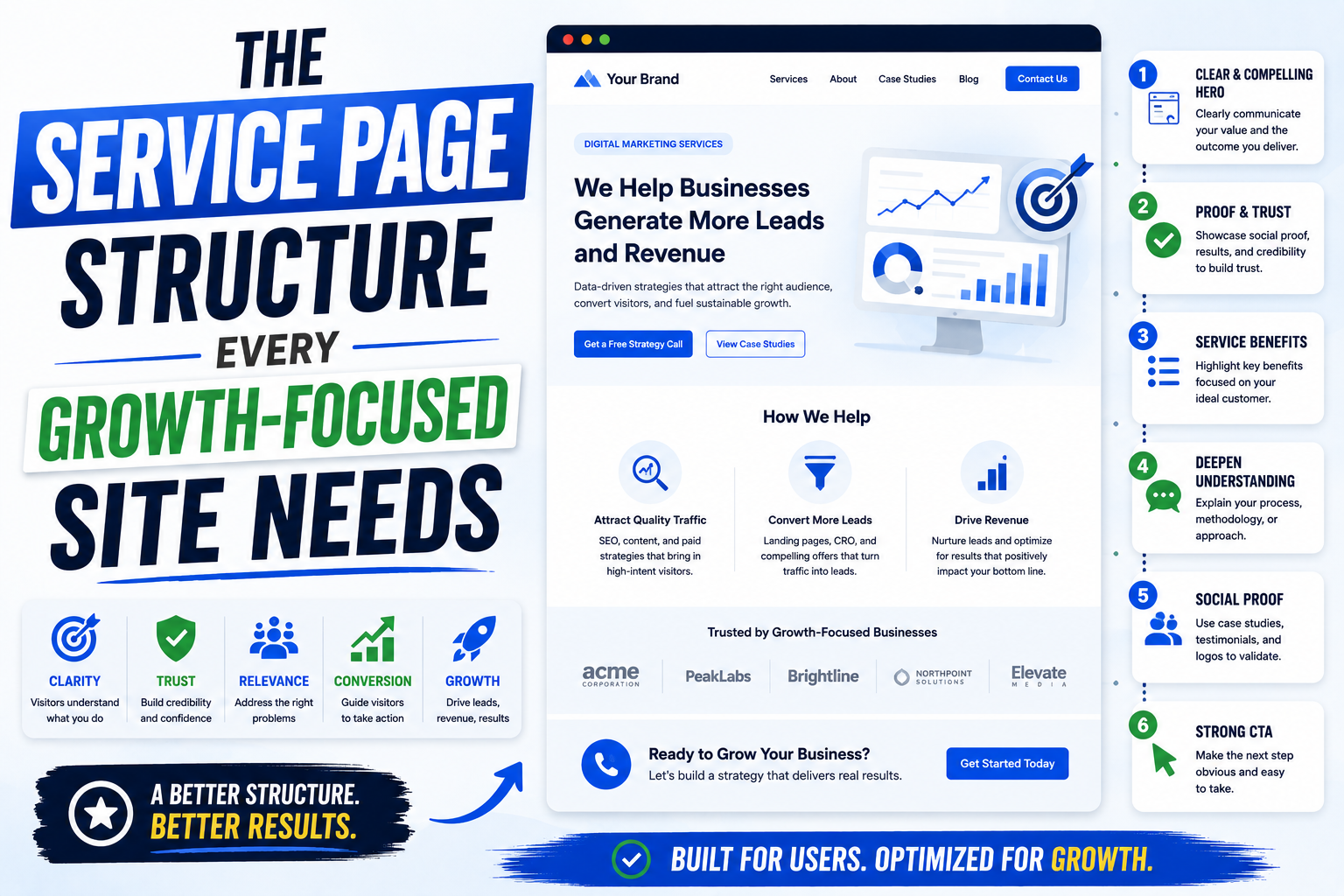
A strong service page explains the buyer problem, solution, deliverables, proof, FAQs, related services, and the next step.
The page needs one commercial job
A strong service page should not try to explain the entire company. It should own one commercial job. That job might be local SEO, Google Ads management, AI workspace setup, intake form design, or service page design. The page should make it obvious who the service is for, what problem it solves, what the buyer gets, and what action should happen next. When a page tries to cover too many services at once, it becomes harder for visitors to understand and harder for search engines to connect the page to a specific intent. A focused service page gives the business a stronger asset for organic search, internal linking, paid traffic, and sales conversations. It also gives the sales process a clearer reference point because prospects can review the offer before they ever book a call.
Start with the buyer problem
The first section should speak to the buyer problem before listing deliverables. A visitor wants to know whether the page understands their situation. For a service business, that might mean weak search visibility, low-quality leads, messy tracking, slow follow-up, thin service pages, or manual operations that limit growth. Once the problem is clear, the solution can be positioned with more precision. This also improves the quality of the copy because the page is not just saying what the company does. It is explaining why the work matters and when the buyer should care. This structure is better for users and better for SEO because the page naturally uses the language of the problem, the service, and the outcome.
Show the offer structure
A useful service page explains what is included without overwhelming the reader. The page should describe the core deliverables, process, expected inputs, and what the client can expect after the work is done. This does not need to become a proposal. It should give enough structure for a serious buyer to understand the engagement. For VizionSpace, that means connecting strategy with execution: audits, page builds, automation maps, tracking reviews, reporting dashboards, or content plans should be described as parts of a system, not isolated tasks. A strong page can also clarify what is not included, which prevents weak-fit inquiries and makes the first conversation more productive.
- Who it is for
- Problem solved
- Core deliverables
- Process
- Next step
Use proof and internal links deliberately
Proof should match the service. A page about service-page design should not rely only on general brand language. It should reference examples, outcomes, relevant client types, screenshots, before-and-after context, or specific operating improvements when available. Internal links should also be intentional. A parent service page can link to subservices, related blog posts, and supporting case studies. A blog post can link back to the related service. This helps users keep moving through the site and gives Google clearer context about how the content is organized. The link should help the reader make progress, not exist only because someone wanted another SEO signal.
Avoid thin subservice pages
Not every capability deserves a standalone page immediately. A subservice page needs unique value: a specific audience, problem, process, proof angle, FAQ set, and conversion path. If the page cannot explain something meaningfully different from the parent service, it should stay as a section until there is enough context to support it. Thin pages create clutter and can weaken the site experience. Strong service architecture is selective. It creates pages when they help buyers understand the offer and when they support the broader SEO structure. Fewer strong pages are usually better than many pages that repeat the same promise with slightly different wording.
Make the next step obvious
The page should end with a clear path for qualified visitors. That may be a growth audit, a service consultation, a project scope, or a related service page. The call to action should match the seriousness of the offer. A visitor reading about a strategic service may not be ready for a generic contact form, but they may be ready to request an audit or review. Strong service pages do not just rank. They guide the right visitor toward a useful next step. That is where SEO and conversion design meet: the page earns attention, explains the offer, and gives the buyer a reason to continue.
Related Service